


Why Nutrition Is the Missing Link in Corporate Performance
Updated: May 5
It started as a small concern in a busy London office, but it quickly became something much bigger. As a former City professional myself, I remember how little attention we paid to nutrition. We were focused on performance, deadlines, results. Food felt secondary, something quick between meetings. Yet, looking back, I can see how much it was silently shaping our energy, focus, and resilience every single day.
It may sound basic, but in reality, everything counts:
what we eat
how often we eat
how fast we eat
even whether we drink with our meals
And when these habits are off, performance follows.
A Familiar Story in a Modern Workplace
Emma, a team leader at a growing consultancy firm, noticed something wasn’t quite right.
Her team was talented, motivated, and experienced, yet energy levels were low, meetings felt flat, and that mid-afternoon dip had become the norm rather than the exception. At first, she thought it was workload. But after looking more closely, she realised something important: it wasn’t just stress, it was how her team was fuelling their bodies.
The Real Problem: High Pressure, Poor Fuel
In fast-paced environments like London, many employees fall into similar patterns:
Skipping breakfast or eating on the go
Relying heavily on coffee to stay alert
Snacking on high-sugar, processed foods
Eating quickly, often at their desks
Staying mildly dehydrated throughout the day
It’s not a lack of discipline — it’s a lack of awareness. One of Emma’s team members, Daniel, was a perfect example.

A quick pastry in the morning, several coffees throughout the day, and no structured meals.
By mid-afternoon, he experienced:
Low energy
Reduced concentration
Irritability
Not surprisingly, this affected not only his performance, but the team dynamic as a whole.
The Shift: Small Changes, Real Impact
Emma decided to explore a corporate nutrition approach, not through drastic changes, but through practical, sustainable adjustments. What followed was a transformation not only in health, but in performance.
What Actually Changed?
1. Understanding How to Build a Meal
Employees learned how to structure meals properly:
Protein for sustained energy
Complex carbohydrates for stability
Healthy fats for satiety and hormonal support
This alone significantly reduced energy dips.
2. Eating Patterns and Habits
One of the biggest surprises?
It wasn’t just what people ate — it was how they ate.
Eating too quickly affected digestion
Skipping meals disrupted blood sugar
Constant snacking led to energy instability
Bringing awareness to these habits made a measurable difference.
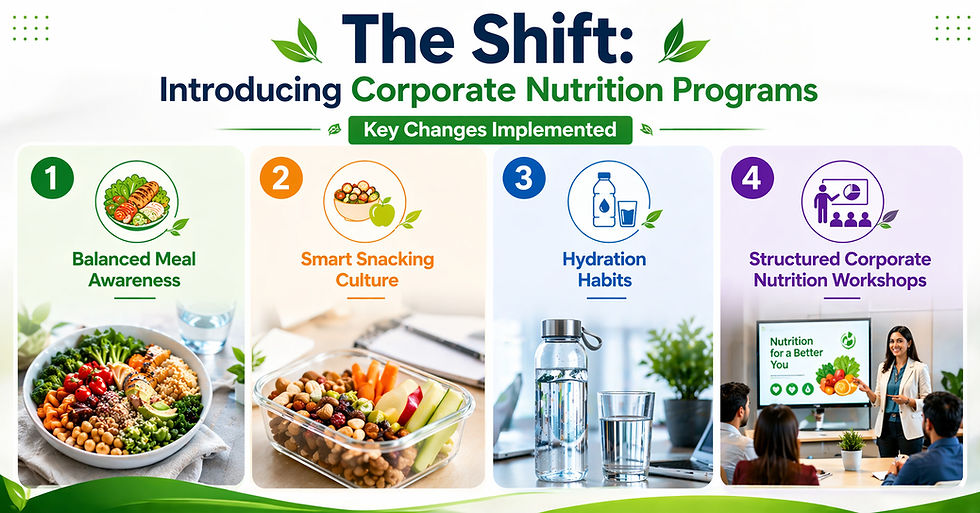
3. Smarter Snacking
The office environment was adjusted:
Processed snacks replaced with whole foods
Sugary drinks replaced with water and herbal teas
The result? Fewer crashes, better focus.
4. Hydration
Even mild dehydration was contributing to fatigue.
Simple habits like keeping water at the desk improved:
energy
concentration
overall wellbeing
5. Education and Awareness
Workshops helped employees understand:
how food affects brain function
why blood sugar matters for focus
how to eat well even with a busy schedule
This knowledge became one of the most valued tools.
The Results: From Fatigue to Clarity
Within a few months, the changes were clear:
More stable energy throughout the day
Better concentration in meetings
Reduced reliance on caffeine
Improved mood and team dynamics
Daniel, who once struggled daily, became more consistent, focused, and energised.
Why Nutrition Is a Performance Tool, Not Just a Health Topic
Nutrition is often seen as a personal lifestyle choice. In reality, it is a business performance driver. It directly impacts:
Energy - Stable blood sugar = sustained performance
Cognitive Function - The brain requires nutrients to think clearly and make decisions
Stress Resilience - Poor nutrition amplifies stress; good nutrition supports recovery
Long-Term Health - Prevention reduces absenteeism and long-term health risks
Why This Matters More Than Ever
Modern corporate environments demand:
high cognitive performance
long working hours
constant decision-making
Without proper nutritional support, the body simply cannot sustain this.
And yet, this is one of the most overlooked areas.
Simple Changes That Make a Big Difference
Even small adjustments can transform how employees feel and perform:
Start the day with a protein-rich breakfast
Avoid relying on caffeine as the main energy source
Structure meals to stabilise blood sugar
Stay hydrated throughout the day
Take time to eat, rather than rushing through meals
These are not extreme changes, but they are powerful.
Final Thought
Looking back at my time in the City, I can clearly see how much potential was lost simply because we didn’t understand how to support our bodies properly. I also saw colleagues develop serious health conditions over time, without ever realising how much nutrition, stress, and lifestyle were contributing to them. Nutrition may seem basic, but it is truly foundational.
When employees fuel their bodies well, they think more clearly, perform more consistently, and feel better doing it, not just in the short term, but for their long-term health and resilience.
Ready to Support Your Team?
If your organisation is experiencing:
low energy
reduced productivity
high stress
it may be time to look beyond workload, and focus on how your team is fuelled.
Get Expert Guidance with Integrally HealthyU
At Integrally HealthyU, we offer expert-led corporate nutrition programs, personalised strategies, and engaging corporate nutrition workshops designed to improve employee health and performance. Whether your team is based in London, UK, or working remotely, you can easily book an online appointment with a qualified corporate nutrition consultant.
Our Services Include:
Customised corporate nutrition programs
Interactive corporate nutrition workshops
One-on-one employee consultations
Practical workplace nutrition strategies
Contact us for more information: +44(0) 7981275578, info@integrallyhealthyu.com

FAQs: How Employee Nutrition Impacts Productivity and Performance
1. What is Corporate Nutrition and why is it important?
Corporate nutrition focuses on supporting employees’ health through better eating habits, blood sugar balance, and metabolic health. Research shows that nutrition directly affects energy levels, cognitive function, stress resilience, and long-term health, all of which influence workplace performance. When employees are properly fuelled, they think more clearly, sustain focus longer, and experience fewer energy crashes.
2. What does a corporate nutrition consultant do?
A corporate nutrition consultant helps organisations understand how nutrition impacts employee performance and wellbeing. This includes assessing common patterns (e.g. fatigue, poor eating habits, high caffeine reliance), delivering workshops, and creating practical, personalised strategies. The focus is not just on food, but on how employees eat, their energy patterns, and metabolic balance.
3. How do corporate nutrition programmes improve productivity?
Corporate nutrition programmes improve productivity by stabilising blood sugar levels, which are key to sustained energy and focus. When employees avoid sharp glucose spikes and crashes, they experience:
more consistent energy
improved concentration
better decision-making
reduced reliance on caffeine and sugar
This leads to fewer dips in performance throughout the day.
4. What are corporate nutrition workshops?
Corporate nutrition workshops are interactive, practical sessions that help employees understand how food impacts their energy, brain function, and long-term health. Topics often include:
how to build balanced meals
managing energy during the workday
reducing fatigue and brain fog
simple strategies for busy schedules
These sessions empower employees with knowledge they can apply immediately.
5. How can companies implement effective corporate nutrition programmes?
Companies can start with simple, high-impact steps:
provide access to a corporate nutrition consultant
offer educational workshops focused on energy and performance
improve food options in the workplace
encourage proper meal breaks and hydration
support employees with personalised guidance when needed
The most effective programmes focus on small, sustainable changes that improve both short-term performance and long-term health.
References
Gómez-Pinilla, F. (2008) ‘Brain foods: the effects of nutrients on brain function’, Nature Reviews Neuroscience, 9(7), pp. 568–578.
Jacka, F.N. et al. (2010) ‘Association of Western and traditional diets with depression and anxiety in women’, American Journal of Psychiatry, 167(3), pp. 305–311.
Ludwig, D.S. (2002) ‘The glycemic index: physiological mechanisms relating to obesity, diabetes, and cardiovascular disease’, JAMA, 287(18), pp. 2414–2423.
Shi, Q. et al. (2022) ‘A review on the effect of gut microbiota on metabolic diseases’, European Journal of Nutrition, 61, pp. 1–13.


Comments